

Karl Fischer Oven: Purchase to Validated Method in 6 weeks
Curtis Swift - Analytical Team Leader 
Curtis Swift - Analytical Team Leader
Karl Fischer (KF) titrations are the industry-standard method for determining water content in the pharmaceutical industry. The equation below is utilised for sensitive and selective determination of water in a variety of samples:
H2O + I2 + SO2 + ROH + Base → [RNH]SO4R + 2RNHI
Traditionally, KF titration has been performed by either an automated volumetric or coulometric system that detects consumption of I2 via an electrochemical detector, usually a Pt electrode. This technology is widely recognised and is included in the United States Pharmacopeia.
However, the current methodology is not universally applicable to all compounds, including many compounds on the path to commercial manufacture that Onyx supports. Side reactions between the analyte and the titration/solvent, poor solubility of analytes in the KF solvent and highly acidic/basic compounds altering the pH of the matrix are all issues that have proven to yield inaccurate results. To meet the demands of tighter process controls and validated methods, a KF oven offers an effective solution to challenges posed by traditional KF titration methods.
When using a KF oven (Figure 1), the sample is weighed into a headspace autosampler vial. The vial is pierced and pressurised with nitrogen before being heated to a specified temperature. As the sample is heated transversally, the water is released into the headspace of the vial. The released water is carried directly into the coulometric KF vessel, where the titration is performed. By preventing the introduction of chemically reactive or poorly soluble analytes that could compromise titration accuracy into the vessel, this sampling method effectively mitigates the issues that have historically yielded inaccurate results.

Figure 1: Schematic of a KF oven
Validating the use of the KF oven
Onyx uses the Metrohm OMNIS platform for an all-encompassing system that can be used for pH determination, auto-titrations, conductivity readings and KF. The KF oven was installed and added to Onyx’s currently existing software, minimising familiarisation time and training required by leveraging prior experience using Metrohm’s equipment.
The first step in validating the KF oven was to adjust the sample size so that the specified water content was within the linear range for water determinations in the coulometric titration. We then ran a temperature gradient, where the sample was heated slowly from 50°C to 250°C and the water release was measured. This informs what temperature all the water is released from the sample and also indicates whether there is any trapped in the molecule. The run resulted in a trace with a large spike very early (Figure 2), indicating that 50°C should be an appropriate temperature for this analysis.
Following that, precision standards, linearity standards and recoveries were analysed to provide confidence that the method would pass validation.
Development of KF oven processes
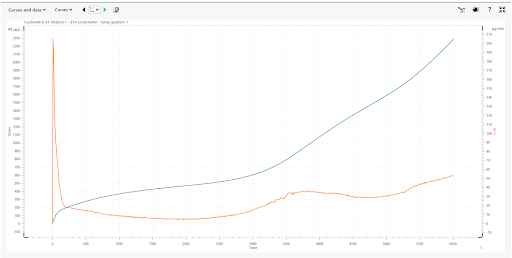
Figure 2: Water release during temperature gradient.
Following instrument installation and qualification, we initiated development work. We had previously identified key raw materials (RMs) and process intermediates requiring water content analysis via the KF oven, and developed a protocol to assess method suitability.

Table 1: Comparison of KF determinations between techniques.
When comparing the same RM analysed with traditional sample introduction and with a KF oven, the reproducibility of the results was significantly improved using the KF oven, making method validation viable.
The development and preliminary validation work were all performed in parallel to writing the necessary GMP documentation and providing training for the instrument.
Outcome
By applying this approach, Onyx validated methods using the KF oven six weeks from purchase, while maintaining consistently high quality.